UNESCO Report: Everything for the youth, nothing by the youth?
2026
UNESCO Report: Everything for the youth, nothing by the youth?
Participation does not always translate into influence. This is one of the key findings of Lead with Youth, the latest edition of the UNESCO Youth Report. Created in collaboration with the United Nations Youth Office, the study seeks to measure youth and student participation in education decision-making processes worldwide, and its results are far from optimistic.
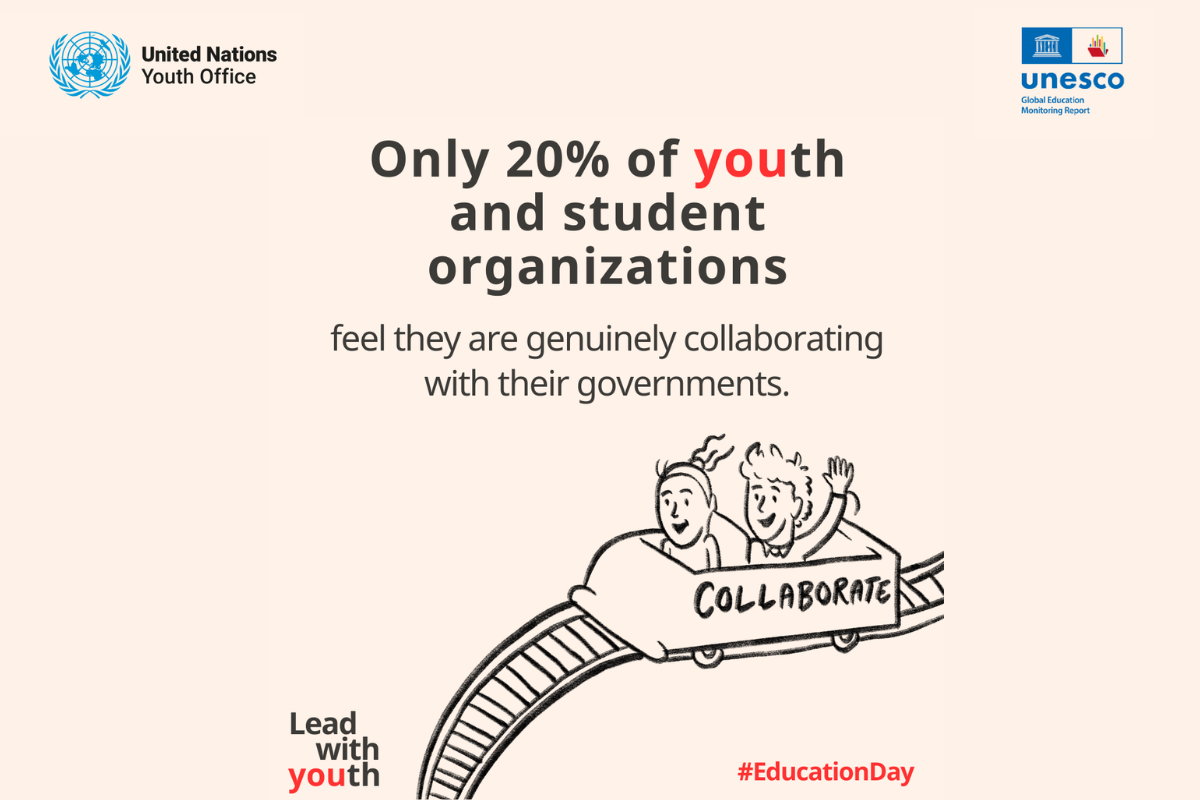
Drawing on data from a survey answered by 93 national governments and 101 youth organisations, the report shows that only one in three countries has formal bodies to engage young people or students in education discussions. But that is not the only concern. Over 40% of youth organisations surveyed reported dissatisfaction with their engagement through formal government structures, and only 20% felt that their contributions were genuinely taken into account.
Beyond highlighting the limitations of well-intentioned participation mechanisms, the study also points to the risk of excluding marginalised voices. This is particularly concerning given that political will to enable youth participation is closely linked to young people’s trust in public institutions, and that feeling unheard can undermine their willingness to become active citizens.
There is, however, some room for optimism. The report highlights the growing presence of youth parliaments, advisory councils, and consultation forums, as well as the new opportunities offered by technology. From schools and universities to digital platforms, civil society organisations, and even street protests, young people are finding multiple ways to engage in public debate and shape education policy, both formally and informally.