AI Youth Navigator brings Youth Information to Europe’s capital
2026
AI Youth Navigator brings Youth Information to Brussels
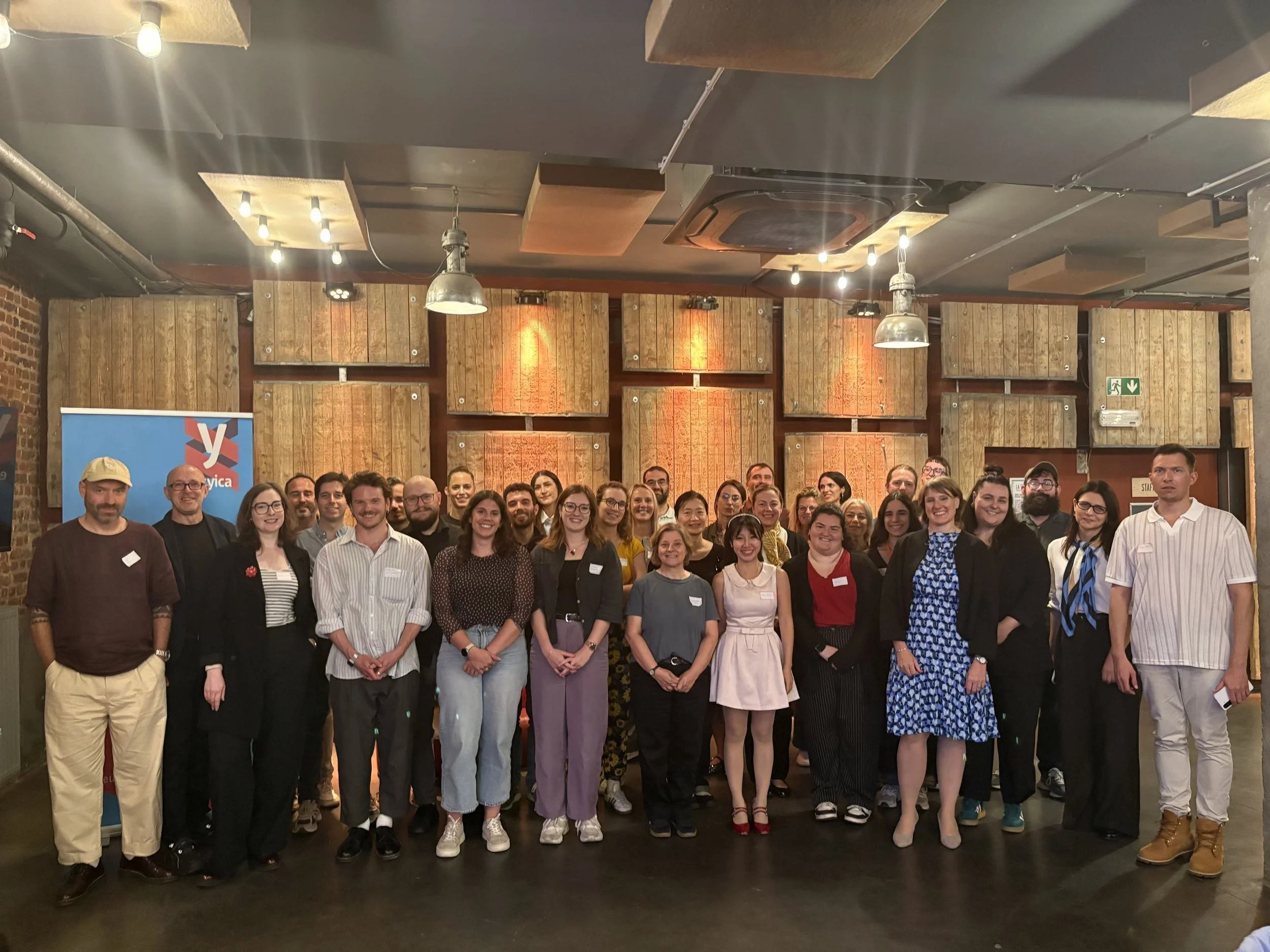
Artificial Intelligence is no longer a distant prospect; it is today’s reality. Embracing AI and channelling its potential toward empowering young people is no longer optional but essential to the sector's future. Driven by this mission, a coalition of European organisations recently concluded the two-year Erasmus+ project AI Youth Navigator with a final conference in Brussels.
The closing event, held at La Tricoterie in Saint-Gilles, brought together youth workers, AI specialists, and policymakers from across Europe. Organised jointly by Jugendagentur gGmbH Baden-Württemberg, Dorea Educational Institute, Udruga Mladih "Mladi u Europskoj Uniji", Technische Universität München, and ERYICA, the gathering served to review the project's outcomes and debate how AI can safely and effectively enhance Youth Information and Counselling.
The proceedings opened with remarks from ERYICA Director Susan Flocken, followed by Stella Loock of Jugendagentur, who traced the initiative's origins and initial milestones. Grounding the debate in practical data, Sanja Barišić of Udruga presented findings from the survey “AI Tools in Youth Information Work,” which pinpointed current AI literacy levels and knowledge gaps among practitioners. Looking to the long term, Günter Bressau outlined future steps to ensure continuous training and capacity building across the continent.
Academic perspective formed a central element of the program. Prof. Sandra Cortesi of the Technical University of Munich delivered a keynote on cognitive offloading, posing a fundamental question for the modern era: in a world where AI can handle an increasing number of tasks, what should humans do?
Prof. Cortesi later joined a panel discussion on AI, youth policy, and the European Agenda, moderated by ERYICA Project Manager Charlotte Simon. The panel featured Günter Bressau, Jory Maeyaert of De Ambrassade, and Simona Petkova, Team Leader for AI in Education at the European Commission, offering a broad range of insights on governance and implementation.
Beyond high-level policy, the conference highlighted the personal experiences of project participants. In a dedicated session, four project contributors—including Jolanta Banelyte from Dorea and Anyu Jiang from TUM—shared their personal journeys, detailing the challenges they faced and the skills they developed throughout the two-year effort.
The event concluded with three interactive workshops focused on practical applications of AI in daily youth work, followed by an informal networking session over coffee. Throughout the discussions, attendees reinforced a core consensus: while AI offers powerful tools for efficiency and reach, human connection, empathy, and guidance must remain at the heart of youth work.